This project involved the creation of a 30min music piece exclusively for Kim Chareonbood (Switzerland) to be used in breathwork sessions.
Kim Chareonbood is a certified sports mental trainer and hypnosis coach from Switzerland. Kim uses scientifically proven techniques from professional sports and psychology to help people overcome fears and mental blocks while surfing, boosting confidence and courage.
About
Kim needed a long piece of music for her breathwork sessions, that could be used commercially. The music had to be slow paced, around 60bpm, with a hypnotic feel, but rich with textures and different drums.
Work
This music project involved playing and recording a variety of instruments. Most percussion, like drums, frame drums, udu and shakers but also some flutes and drones, to achieve an hypnotic, but interesting, sound.
Some effects and drones were created from scratch, while others were used from field recordings done in different places (water, rain, etc).
After everything was properly recorded, all elements were arranged and mixed. The instruments and sounds were combined with subtle changes (gain, EQ, compression, panning, etc), guiding the listener through the different moments of intensity.
Final Product
The full version of the music created exclusively for Kim Chareonbood is 30min in duration. You can hear a short 5min cut in the video bellow.
This video was made using stock footage, with a couple of different landscapes to accompany the music.
Because sound and music are essential across a variety of media, I have the chance to explore new horizons and get in touch with the most interesting people from all around the world. This project is a great example of that!
Have you thought about plastic surgery and how music would play a role in this? 😁
Had the chance to compose and produce the music for “The Slice Is Right”, a podcast led by Dr. Scott Ogley and Dr. Aldo Guerra, two board-certified plastic surgeons in Scottsdale, Arizona (US).
Process
Had a talk with Genaro Guerra, business manager at Guerra Plastic Surgery Center (Scottsdale, Arizona, US), who wanted something kind of upbeat, fun and energetic for the presentation of this new podcast.
At first I was reluctant in adding vocals for this piece, because I didn’t want them to be a distraction, but after composing a rough demo, I was feeling the mood of the song and ended up doing them, based on the “motto” of their work and how the patients were supper happy.
I recorded several vocals to deliver the theme of the podcast (“We do it right”, “The Slice is Right”). Later, after the song was almost done, added a line from a movie (The Amazing Mr. X, which is in public domain) emphasizing the look into the future, rather than probing into the past. To make the song more interesting.
There are two versions, 15s and a 1min, to allow some flexibility for the upcoming episodes and related content. Client loved it and I was happy with the result as well!
Final Product
In this first episode (premiered Dec 2024), Dr. Scott Ogley and Dr. Aldo Guerra talk about tummy tucks, covering everything from preparation to recovery, sharing expert tips and fun insights.
“STONE” is a short film directed by Kade Allen. It is set 12,000 years ago and was shot entirely on location on Stone Mountain in Atlanta Georgia (United States).
Plot
“12,000 years ago a man buried his only family, he buried his legacy. Only those who are laid on top of a holy mountain can truly be at peace. He knows he must trek to its peak to lay his kin, mortally wounded from a battle with the wicked beast. His journey will test his mettle and fortitude of his expanding mind. Only halfway up the mountain his body fails. Only with the help of an old hermit living on the mountain can he make it to the peak and lay his kin to rest. Only to be alone for the rest of his days.”
I was involved in this project as a Score Composer and producer, making the music for all the scenes of the movie. The genre that Kade Allen was looking for was something along the lines of Tribal Percussion. We both agreed that in each scene would be interesting to introduce different instruments, to convey the aesthetics, growing emotions and different feelings throughout the movie.
Process
I had to imagine how music would be made at that time and the tools that would be available to create different sounds and textures. Some of those would be Sticks, Claps, Drums, Didgeridoos, Flutes, Stones and Seeds. Ended up recording some gutturals and vocalizations as well, for a couple of scenes, which was quite fun.
The instruments, however, needed to be captured as raw as possible, without many effects going on, for a more natural and involving sound, translating the ancient and prehistoric scenes.
Want to have a taste of the music?
Here’s an alt. version of one of the songs
I learned from researching about paleolithic music, that a flute made of bone, dating approximately 35,000 years ago, was discovered in a cave, in Germany (Paleolithic flute), 2006, which is amazing! There are many instruments, really quite old, that were used in ceremonies, rituals with chants and dancing, to interact with gods and spirits.
By paying attention to the soundtrack as a whole, you’ll notice that frame drums, with a lower pitch sound, lead most of the scenes. Kind of like a bed for everything and also taking the spotlight at times. But there are moments in the movie that transport the listener to another world, especially the Hermit scenes, where the didgeridoo assumes a bigger role.
Direction: Kade Allen Cast: Eamon Glennon (Bear Killer) and Simon Shih (Hermit) Producers: Salvatore Cardinale and Colleen Ryan. 1st AD: Sophie Reidd, DP: Brenden Mascherino, 1st AC: Wesley Collins, 2nd AC: Weston stokes, Cam Utility/Loader: Lukas Karamitsanis, Sound Mixer: Alkire Brett, Music Score: Nuno Pinto de Carvalho, PD: Ken Misaki, Costumes: Davis Biddlecomb, Gaffer: Michael Magarahan, Best Electric: Jrdan Bristow, Key Grip: Aidan Kelly Best Grip: Charles Hoy, Grips: Max Fields, Kenadie Larson, Ari Isenberg, Editor: Jolie Mccauley, Colorist: Brenden Mascherino, Helper: Cierra de Bie, Film test Stand-In: Dexter Assa, Graded using: Dehancer Film, BTS Photography: Ari Isenberg.
Check other projects developed with some amazing people from all around the world!
Atlantic Union Ensemble – Sons and Daughters of Harmony
Editing & Mixing [Choir/Orchestral]
Year:
2024
Role:
Mixing Engineer, Sound Designer
Client:
Mark Christopher Scheffler (US)
About
“Sons and Daughters of Harmony” is a choral and orchestral work celebrating the universal gift of music and musicians and the idea that we are all, without exception, “Sons and Daughters of Harmony”
Mark Scheffler
This project, put together by Mark Scheffler (Appleton, Wisconsin USA), is a high-quality recording of a studio performance for an 11 minute choral and orchestra piece.
Had a great time working in this project because it was challenging, in terms of sound design and editing. Got access to 8x separate vocal files by Darren and Caroline Clarke (England), an orchestral composition by Oren Sela (Israel), and the goal was to turn the 8 voices SSAATTBB (2x soprano, alto, tenor, and bass), into a full choir accompanying the orchestra.
Process
Characteristics of a Choir
A true choir has lots of texture. Its a combination of many singers, performing in unison, whose sound is captured at a distance with carefully placed mics, capturing both voices and room acoustics.
The overall sound of a choir is like a “dome”, when analyzed in a frequency window, with strong mids but fading low-end and high-end, leaving “room” for the orchestration.
Each singer in a choir introduces tonal changes, different registers, speed, diction and many other variations.
Its these changes, variations and acoustics that contribute to a strong wall of sound.
Audio editing and Choir production
To create the illusion of a Choir, from only 8 SSAATTBB vocals, I had to duplicate them, to some extent, in new audio channels, each with its own processing, as if new singers with different vocal registers were present.
Some of the techniques used include:
changing the position of specific words and phrases in the 11 min timeline (tedious process but worthwhile for a more natural sounding),
making tonal variations with a couple of pitch shifting and format tools (specific for high pitch and lower pitch voices),
adding tonal corrections,
panning,
and of course, the usual EQing, compression and saturation to make the sound more rich.
In addition, most choirs are recorded in Halls and Churches. Creating a “space” effect and ambience for the final sound was mandatory, which also made the sound more realistic. One of the things I tried to avoid was going too hard on processing (might sound like a paradox, giving all the tools used and changes done). I didn’t want a robotic/degraded choir, but rather a more natural one.
After having done many lines of audio, the music piece really sounded like a full and realistic choir in a large hall. Although, Me and Mark decided to go back a bit, reducing the number of vocals, because we started to miss some of the sharp and fast consonant sounds. Going back and forth was necessary to find the perfect balance between getting a great sound and crispiness of the consonants!
Mixing all elements together
After ending up with a nice textured ensemble the next step was to blend the Orchestra instrumentation and the Choir together. In the final mixing, and since the orchestra is really dynamic (can go too quiet and too loud in a matter of seconds) I had to make sure the Choir didn’t stay behind, in energy and gain.
Getting into more technical stuff, side-chain processing and automating parameters were needed, in order to make the sound translate well across the 11min piece.
Problem:
When working with a very dynamic audio (instrumentation), and adding a leading element on top (choir in this case) with less variations, that audio will either sound too quiet or too loud throughout the whole piece. Its like having one sound jumping a lot while the other, drone like, remains still.
A gain controller is needed to avoid this discrepancy and make both elements be heard at the same time.
Solution:
Instead of using compression to level the big variations in the main piece (killing its dynamics and making it dull), I prefer to use an “inverted compression” side-chain technique.
This controls the gain of the additional element (choir), compressing and expanding, based on how the instrumentation (orchestra) behaves. When programmed correctly, one instrument follows the other and the song will basically “mix itself”, apart from a few changes here and there of course.
One other reason why I like this method, apart from maintaining most dynamics, is the option to make any sound responsive to both the overall gain or just part of the spectrum (lows, mids or highs) of another instrument.
Side-chain band compression is also useful when the Choir goes really loud in certain parts.
In these, only the mids in the orchestration will duck down by a few dB, avoiding frequency clashing. It creates headroom in this region for the choir to play freely, as opposed to a pumping effect.
Its not very noticeable but enough to make the mix very transparent and clean, especially when all elements go hard in the climax.
Did you know that you can find this technique in modern music such as Pop, Electronics, Metal…?
When the kick hits, all other elements go down in different proportions or specific parts of the spectrum, making the kick feel stronger in the mix, without being actually louder than the rest.
Final Product
The recording was then mastered to be distributed commercially and will be used to promote the piece for live performances by choirs and orchestras (various levels including collegiate, festival ensembles, and professional).
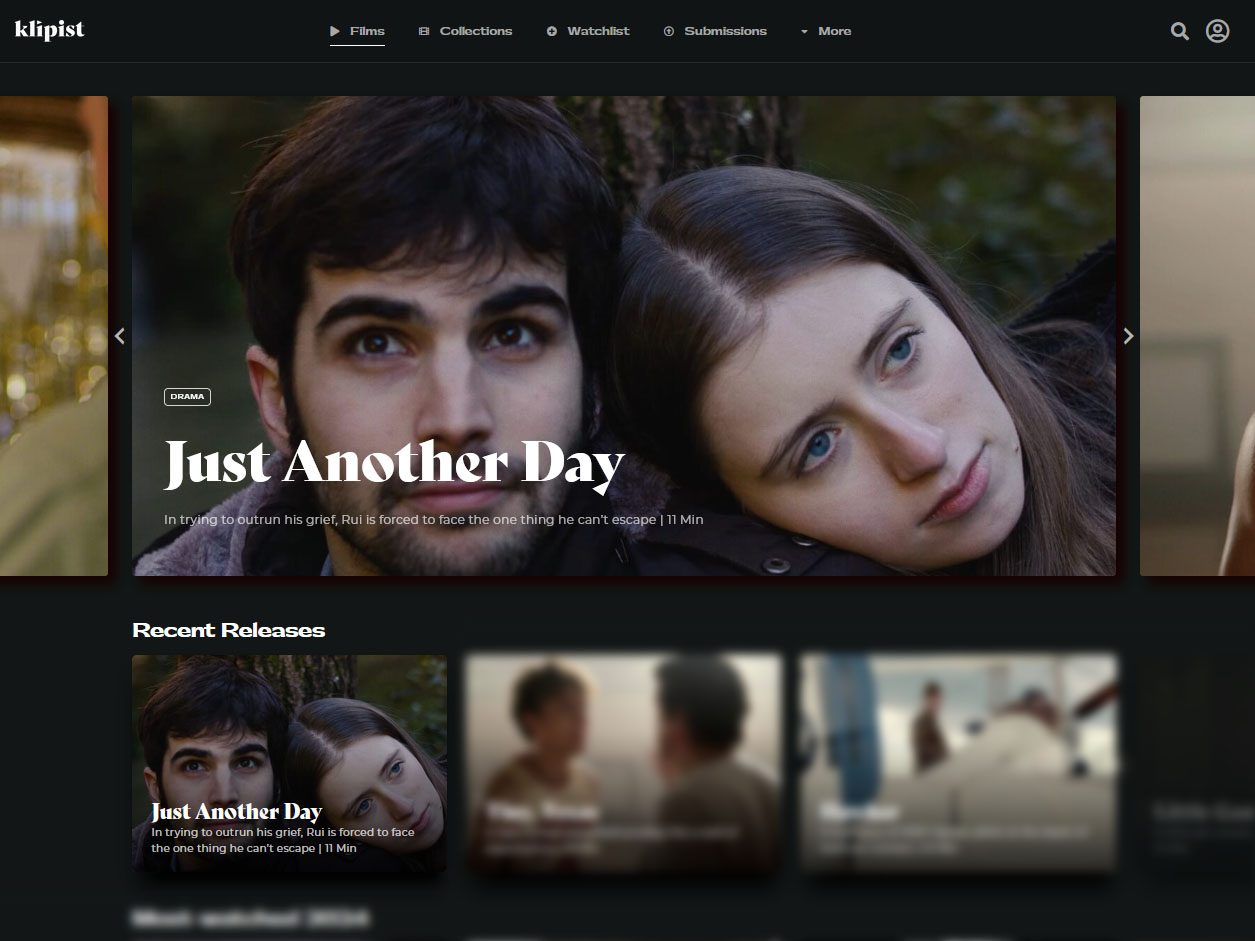
“Apenas Mais Um Dia” (“Just Another Day” in English) is a cinematographic project by final year students from the Art School / Escola das Artes – Universidade Católica do Porto.
Plot
“After the loss of his best friend, Rui tries to move away from everything he knows, repressing his feelings, thinking he could live better that way. However, his attempt to escape leads him to face his guilt and move towards acceptance.”
“Apenas mais um dia” is directed by Gonçalo Dias. With producer: Pedro Costa, Dir. of art and photography: Tiago Sousa, Ass. Director: Camila Pereira, Dir. Sound: Nuno Pinto de Carvalho. Actors: Rafael Ferreira (Rui), Rita Duque (Margarida), Carolina Mendes (Diana), Sebastião Varaine (Filipe).
The team spent a whole week filming inside a house, in a village of Luso region (Mealhada, Portugal) and for the last day, in a park at the Mountain range of Bussaco (Serra do Bussaco).
Sound direction and capture
I was in charge of directing the sound, with operating the boom+recorder and choosing the best locations to capture and orient the shotgun mic properly, both indoors and outdoors.
Using a shotgun mic indoors isn’t easy because the sound can become really boomy sometimes, especially when placed around corners and near ceiling. Capturing a clear dialogue without the capsule appearing in front of a camera requires constant calibration and testing, but I loved every part of it.
This was mid January. Inside the house, we were very comfortable and warm, but the last day, at “Serra do Bussaco”, out in the open, was really really cold. Kind of like -2ºC to 0ºC I believe. We had a good time though, and mic didn’t complain. 😉
“Serra do Bussaco” is an amazing place to relax by the way. Far from the city, you can hear the sounds of birds, water flowing in the lake, wind shaking the trees and all. It was nice!
Got the chance to capture many interesting sounds there, and some were helpful later in the post processing.
Every scene shot was carefully planed previously (locations, positions, etc) by the production team, which made my job in getting the best sound possible easier and efficient.
The most challenging, and funny, part was the “fighting scene”. I had to move fast in order to capture the actors moving (steps, clothes, shouts, breaths) and avoid hitting the boom mic against any object.
Post Production
Few months later, and after part of the footage was taken care of (video editing), I was tasked with editing the dialogue audio and create foley for the different scenes.
Dialogue Editing
Having worked in dozens of VO/Dialogue/Vocals and syncing them with video, this was a straightforward process. Never the less, it takes time choosing the best audio take for the camera angle, sync it with the picture, apply the necessary tools to enhance the audio and sometimes replace words from other takes to get clearer speech.
For the dialogue recorded outdoors, in the park, I had to use specific tools for reducing the background noise.
The recordings near the lake, as you can imagine, were really noisy. The sound of water flowing in abundance, is perceived like a white noise or hiss.
Taking off or reducing these ambient sounds needed special attention, in part because the level of ambience (background noise) in these varies from angle to angle, depending on the position of the boom mic.
After processing I had to make sure the audio quality was similar in each recording, so that any transition to the next take/angle happens smoothly, without alerting the viewer that something in the audio changed.
The goal, as always, is to make the sound of the speech coherent and clean as possible, without making it too artificial with processing.
Removing all noises and echos from a recording makes it unnatural/unrealistic, especially in this context, outdoors in the park.
Foley production
After the dialogue being done and shared with the rest of the team, I moved to the foley creation.
Some scenes needed simple sounds like cloth rubbing and footsteps in gravel, while others required more complex sounds.
Some I managed to re-use from my own libraries (water, birds, etc) and from previous boom recordings (tv falling/breaking, different takes from “fight scene”) while others were created on the spot (rubbing of clothes, slap, breaths, etc).
A good slap, for example, can be obtained from a mix of clap and a snare hit on top of a regular slap. Sorry for all those slaps Rui 😆
Final Product
The short is being sent to a couple of festivals/events. You can check the poster, teaser trailer and the official page bellow.
On July 31, 2025, the final version of the film was published on Klipist, streaming platform for the best short films, selected and curated. There you have access to award-winning short films from around the world.
Direction: Gonçalo Dias Production: Pedro Costa Text: Gonçalo Dias Direction of Photography: Tiago Sousa Direction of Sound, Capture, Dialogue Editing and Foley: Nuno Pinto de Carvalho Art Direction and Color Correction: Tiago Sousa Actors: Rafael Ferreira (Rui), Rita Duque (Margarida), Carolina Mendes (Diana), Sebastião Varaine (Filipe) Ass. Director and Setup: Camila Pereira Sound Mix: Bernardo Bento Score: André de Carvalho
Check other projects developed with some amazing people from all around the world!
“Carbon Exit” is the first single by the artist known as Veronica+. Based at United Kingdom, the music presented here pushes the boundaries of experimental. Its also accompanied by a mysterious and intriguing video, which you can watch bellow.
The process
Mastering this music piece was captivating in a way, not only because I enjoy working with experimental music but also because the sound has a challenging side.
In the more pop or commercial genres, the instruments are much more defined, being easier to recognize, process, and compare with other references. But in an experimental genre, nothing is obvious, its a discovery listening! Which requires me to be much more objective when mastering while, at the same time, analyze every new element that comes up.
All to make sure the piece sounds balanced and dynamical enough to fit any possible scenario, either in a multi-genre playlist or as a score for a video.
Intro jingle composition and VO editing for the Podcast “Thinking-Big Between The Lines” by Edite Amorim, Portugal.
Edite Amorim is a Portuguese entrepreneur with a Psychology degree who believes in taking theory into practice. THINKING-BIG is her project, with Positive Psychology put into action, through tailor-made Workshops & Talks using Group Dynamics, Creativity and Business Storytelling, directed for companies, arts and education.
Process
The goal was to make something along the lines of Jazz, with a nice groove, not too happy, with room for many interpretations, since it’s a podcast about books and all the horizons they open.
Final Product
Here’s the intro music with VO, followed by the outro/ending:
The podcast “THINKING-BIG Between The Lines” can be found here.
Check other projects developed with some amazing people from all around the world!
This is an alternative version of a project for a private client. They wanted something along the lines of tribal percussion music, for a video. Not too cinematic, but with three specific parts, in a steady rise of percussion intensity.
Process
To make the original piece I recorded a couple of vocal takes, flutes, 2x djembé, a doumbek, tibetan bowl, seed shakers and metallic shakers too.
To showcase the project, I changed it a little (new rhythms, flutes, vocals) and increased the intro duration, for a deeper mood.
Final Product (Alt. Ver.)
Decided to call this one “Green Rituals”. It reminded me of green magic from “Magic: The Gathering” cards. So I designed the cover-art with that in mind, including the short video bellow as well.
This is a documentary about the the rise of Atlético Clube de Portugal, in which I was involved as a sound-designer. Its directed by Francisco Pereira Coutinho, to whom I thank for the opportunity.
Atlético is a Portuguese sports club from Alcântara, within the city of Lisbon. This documentary covers the history of the club, with interviews from the Chairman, Manager and many other members deeply involved and responsible for its growth.
Process
🔊 Sound editing was quite exhaustive, and surgical in some cases. Many moments involved the reconstruction of words, tone changes, noise reduction (background, breaths, clicks, etc), gain variations, as well as the addition of sound effects to complement the action.
There are sounds which the camera didn’t capture but, from the viewer standpoint, you could almost feel or hear them when checking the raw footage. There are many instances where the crowd is chanting, cheering, clapping, there’s fireworks sounds, etc, that were added in post, but look like they belonged there all along 😉 as part of the narrative of course.
Final Product
Despite all the work and treatment, the objective was always getting the audio and transitions to sound as natural as possible!
Direction: Francisco Pereira Coutinho Footage: Marta Dias Coelho, Francisco Pereira Coutinho Color Grading: Daniel de Laranja Sound Design: Nuno Pinto de Carvalho.
Check other projects developed with some amazing people from all around the world!